
Bankruptcy Lawyer vs Debt Settlement Choices
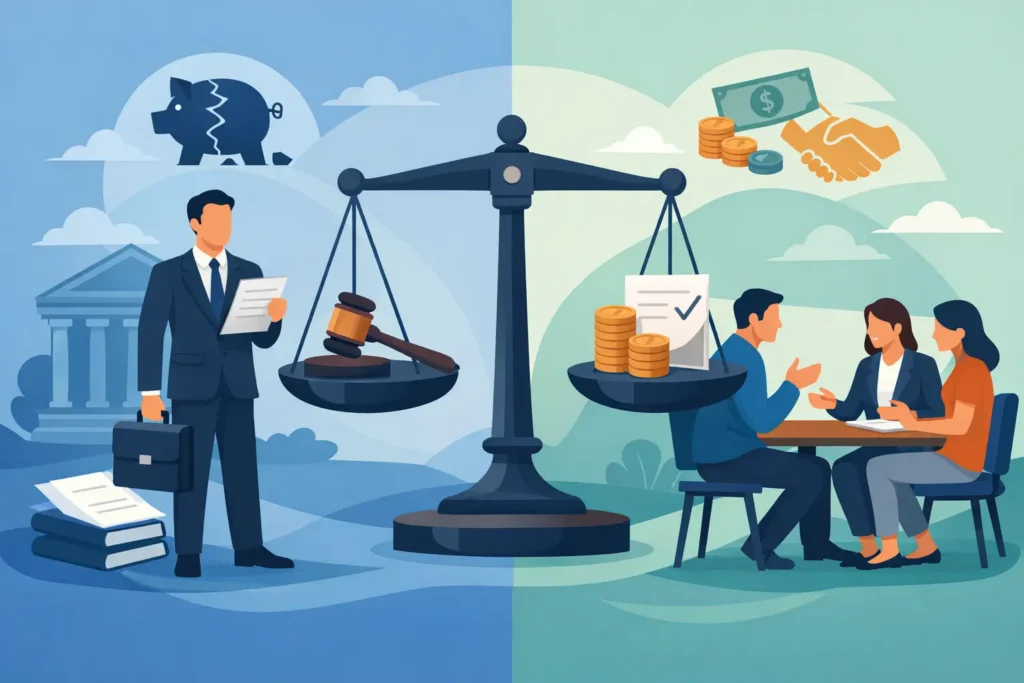
A collection notice, a wage garnishment threat, and a maxed-out credit card can make every option sound urgent. The choice between a bankruptcy lawyer vs debt settlement is not simply about paying less. It is about the kind of debt you have, whether creditors are already taking action, what assets or income you need to protect, and how much uncertainty you can afford.
Both paths can help people regain control, but they work very differently. Debt settlement attempts to negotiate unsecured balances for less than the amount owed. Bankruptcy is a legal process that may discharge eligible debts or create a court-approved repayment plan. The right choice depends on your complete financial picture, not a single advertised monthly payment.
Bankruptcy Lawyer vs Debt Settlement: The Core Difference
Debt settlement is a private negotiation. You, a settlement company, or an attorney contacts creditors and tries to reach an agreement to resolve a debt for a reduced lump sum or a short payment plan. It is generally used for unsecured debt, such as credit cards, medical bills, and certain personal loans.
Bankruptcy is filed in federal court and is handled under a detailed set of rules. A bankruptcy lawyer evaluates your income, property, debts, recent financial transactions, and goals before recommending a chapter. Most consumers consider Chapter 7, which can eliminate qualifying unsecured debt, or Chapter 13, which creates a repayment plan that usually lasts three to five years.
The biggest practical difference is legal protection. When you file bankruptcy, an automatic stay usually stops most collection activity, including collection calls, lawsuits, wage garnishments, and bank levies. Debt settlement does not automatically stop creditors from calling or suing. A creditor may negotiate, refuse to negotiate, or pursue a judgment while settlement discussions are underway.
When Debt Settlement May Make Sense
Debt settlement can be a workable option when your debt is mostly unsecured, you have access to funds to offer creditors, and you want to avoid filing bankruptcy. It can also fit someone who has enough income to save for settlements but cannot realistically pay every account in full.
For example, a person with several charged-off credit cards and no pending lawsuits may be able to settle accounts one by one. In some cases, creditors will accept less because they prefer a certain payment now over the cost and risk of continued collection efforts.
Still, settlement has real trade-offs. Creditors are not required to accept an offer. Missed payments can lead to additional fees, interest, collection activity, and legal action. If you stop paying accounts while accumulating money for settlements, your credit can decline further before a deal is reached.
There may also be a tax issue. Forgiven debt can sometimes be treated as taxable income, although exceptions may apply, including when a person is insolvent. A tax professional or attorney can explain whether a proposed settlement could create a tax bill you did not expect.
When a Bankruptcy Lawyer May Be the Better First Call
A bankruptcy lawyer is often the stronger starting point when collection pressure is immediate or your debts are too large to settle within a reasonable time. If you have received a lawsuit, wage garnishment notice, foreclosure notice, repossession threat, or bank levy, waiting for voluntary settlements may leave you exposed.
A lawyer can also help if your financial situation is more complicated than credit card debt. You may need guidance on protecting a home, vehicle, retirement account, business interest, tax refund, or other property. Bankruptcy exemptions vary by state, and choices made before filing can affect the outcome. Do not transfer property, cash out retirement funds, or repay relatives to prepare for bankruptcy without getting legal advice first.
Bankruptcy does not erase every obligation. Student loans are usually difficult to discharge. Recent taxes, child support, alimony, criminal fines, and debts tied to fraud may also remain. That does not mean bankruptcy has no value in those situations. Discharging other eligible debts may free up income for obligations that cannot be eliminated.
Compare Cost Beyond the Monthly Payment
People often compare these options by looking at the advertised fee. That is understandable, but it can be misleading.
Debt settlement companies may charge a percentage of enrolled debt or a percentage of the amount saved. You may also need to build a settlement fund while accounts remain delinquent. If a creditor sues before a settlement is complete, you could face legal costs or a judgment in addition to the original balance.
Bankruptcy involves court filing fees, required education courses, and attorney fees. The cost varies with the chapter and complexity of the case. Chapter 7 attorney fees are often paid before filing, while Chapter 13 fees may be partly included in the repayment plan. A consultation can clarify the likely total cost and whether a payment arrangement is available.
The useful question is not, “Which option has the lowest upfront payment?” Ask, “What is the likely total cost, risk, and timeline for becoming current and stable again?” A low payment that leaves you vulnerable to lawsuits may not be the less expensive choice.
Credit Impact Is Real, but It Is Not the Whole Decision
Both debt settlement and bankruptcy can affect credit. Late payments, accounts in collections, settlements for less than the full balance, and bankruptcy filings can all appear on a credit report. Bankruptcy may remain on a credit report for years, depending on the chapter and reporting rules.
But many people considering these choices already have damaged credit because they cannot keep up with payments. In that situation, preserving a credit score at all costs can lead to deeper debt, more missed payments, and more stress.
Focus on what recovery looks like after the decision. Can you make the proposed payment without relying on new credit? Will you have money for rent, food, insurance, transportation, and emergencies? Can you stop the collection cycle? A manageable plan is usually more valuable than an attempt to maintain appearances while balances continue to grow.
Questions to Ask Before You Choose
Before signing with a debt settlement company or filing a bankruptcy case, gather recent statements, collection letters, pay stubs, tax returns, bank statements, and a list of your monthly living expenses. Then ask direct questions.
For debt settlement, ask which debts are eligible, how fees are charged, whether you will be asked to stop payments, what happens if a creditor sues, and how long the process may take. Be cautious of any provider that promises to settle every debt, guarantees a specific savings amount, or tells you not to read creditor correspondence.
For bankruptcy, ask which chapter may fit, what property could be protected, which debts may survive, how the automatic stay applies to your situation, and what the total expected cost will be. A qualified attorney should explain both the benefits and the limits in plain language.
It can be smart to speak with a bankruptcy lawyer even if you prefer settlement. A consultation is not a commitment to file. It gives you a legal baseline for comparing an offer against the protections available through bankruptcy.
Find Help Without Adding More Confusion
When debt feels urgent, broad online searches can produce aggressive ads, incomplete answers, and providers who are not right for your case. Start by identifying the service you need: bankruptcy counsel, debt settlement support, tax resolution, or consumer protection guidance. Then look for a professional who handles that category regularly and can discuss your circumstances directly.
Dwai.com organizes professional categories so consumers can move from a specific problem to a clearer path for contact. The goal is simple: spend less time sorting through noise and more time speaking with a specialist who can explain your options.
You do not have to decide based on fear, pressure, or a sales pitch. Get a clear review of your debts, income, assets, and deadlines, then choose the path that gives you the most realistic way forward.