
Chapter 7 vs 13: Which Fits Your Debt?
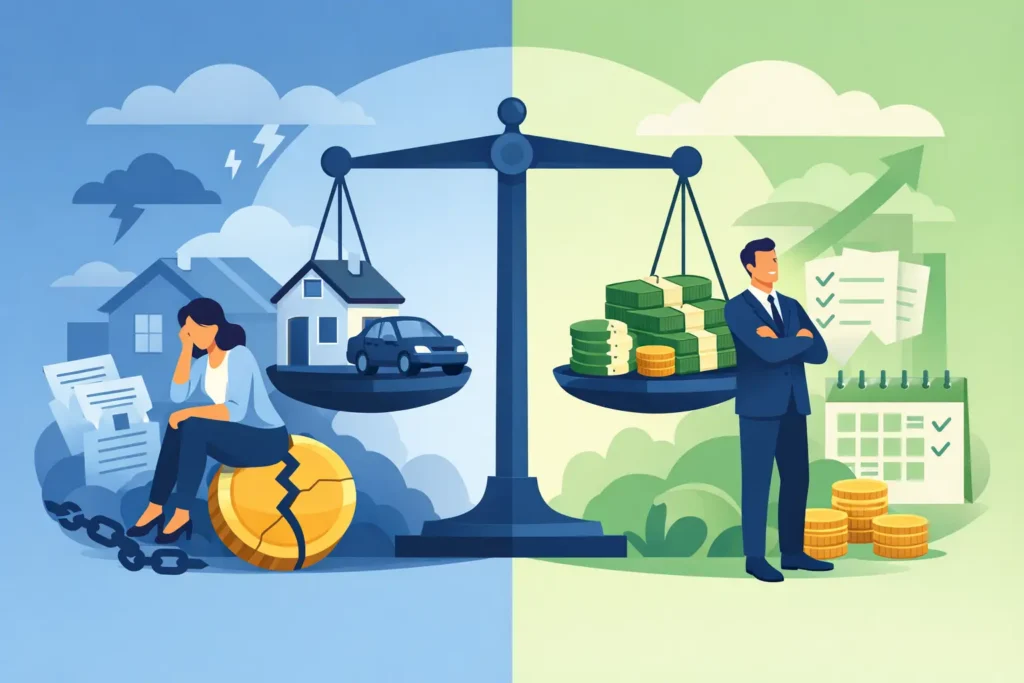
If you are behind on bills, dodging collection calls, or worried about losing your car or home, the question usually is not whether debt is stressful. It is whether chapter 7 vs 13 gives you a realistic way forward. Both are forms of personal bankruptcy, but they solve different problems and work best for different financial situations.
The short version is simple. Chapter 7 is designed to wipe out qualifying unsecured debt faster. Chapter 13 is designed to give you time to catch up through a court-approved repayment plan. That sounds straightforward, but the better choice depends on your income, your assets, your goals, and what kind of debt is causing the pressure.
Chapter 7 vs 13 at a glance
Chapter 7 is often called liquidation bankruptcy. In many cases, people who file Chapter 7 do not actually lose everything they own. Exemption laws protect certain property, and many filers keep everyday necessities, retirement accounts, and sometimes even their car or home equity, depending on the circumstances. The main benefit is speed. A typical Chapter 7 case can move much faster than Chapter 13, and eligible unsecured debts like credit cards, medical bills, and personal loans may be discharged.
Chapter 13 works differently. Instead of wiping out debt right away, it creates a repayment plan that usually lasts three to five years. You make monthly payments to a trustee, and those funds are distributed to creditors based on the plan approved by the court. This option is often used by people with regular income who need time to catch up on mortgage arrears, car payments, tax debt, or other obligations that cannot be handled as easily in Chapter 7.
If you are deciding between chapter 7 vs 13, think of Chapter 7 as a faster reset and Chapter 13 as a structured catch-up plan.
How Chapter 7 works
Chapter 7 starts with a full review of your finances, including income, expenses, assets, debts, and recent financial activity. One major issue is the means test, which looks at your income and helps determine whether you qualify. If your income is too high, Chapter 7 may not be available, or the case may face challenges.
Once filed, the automatic stay usually stops most collection activity. That can include lawsuits, wage garnishments, collection calls, and creditor pressure. A trustee is assigned to review the case. If you own nonexempt property, the trustee may have the right to sell it to pay creditors. In many consumer cases, though, there are no assets available for liquidation.
For someone buried in unsecured debt with little property at risk, Chapter 7 can be a strong fit. It is often attractive when the main goal is to eliminate credit card balances, medical debt, or old personal loans and move on as quickly as possible.
The trade-off is that Chapter 7 is not a cure for every kind of debt. It generally does not erase child support, most student loans, recent taxes, or alimony. It also does not give you a long runway to catch up on secured debts. If you are far behind on your mortgage and want to keep the house, Chapter 7 may not give you enough time.
How Chapter 13 works
Chapter 13 is built for people who have income coming in but need legal structure to deal with debt. You propose a payment plan based on your financial picture, and if the court approves it, you make payments over time.
This approach can be especially useful if you are behind on your mortgage and want to stop foreclosure while catching up gradually. The same can apply to car loans in some cases. Chapter 13 can also help with certain tax obligations and debts that would survive Chapter 7.
Another reason people choose Chapter 13 is asset protection. If you have property that might be at risk in Chapter 7, Chapter 13 may let you keep it while paying creditors through the plan. That does not make it easier, exactly. It makes it more structured. You are committing to years of payments, court oversight, and a budget that has less room for surprises.
That is the main drawback. Chapter 13 can be powerful, but it takes time and consistency. If your income is unstable, keeping up with the plan may be difficult. A missed payment is not always fatal, but repeated problems can put the case at risk.
Who usually chooses Chapter 7
Chapter 7 tends to make the most sense for people in a few common situations. One is when unsecured debt is the main problem and there is no practical way to repay it. Another is when income is low enough to qualify and there are few assets that would be exposed.
It can also be a fit for someone who does not need to save a house from foreclosure or catch up on major secured debt. If the goal is a cleaner, faster exit from overwhelming unsecured balances, Chapter 7 is often the more direct route.
Still, faster is not always better. If you own valuable nonexempt assets, the cost of losing them could outweigh the benefit of a quick discharge.
Who usually chooses Chapter 13
Chapter 13 often fits people with regular wages or business income who need time, not just relief. If you fell behind after a medical issue, divorce, job interruption, or temporary financial setback, Chapter 13 may give you a framework to recover without giving up key assets.
It is also common for homeowners who are trying to stop foreclosure and catch up over time. Someone with tax debt, non-dischargeable obligations, or property that would be vulnerable in Chapter 7 may also lean toward Chapter 13.
This is where the chapter 7 vs 13 decision gets personal. Two people with the same amount of debt can need completely different solutions based on income stability, home equity, and what they are trying to protect.
The biggest differences that matter in real life
The first major difference is timing. Chapter 7 is usually much shorter. Chapter 13 lasts years. If you need immediate debt discharge and qualify, Chapter 7 has a clear advantage.
The second is property risk. In Chapter 7, nonexempt assets may be sold. In Chapter 13, you usually keep your property but pay into a plan that reflects what creditors would have received otherwise.
The third is arrears. Chapter 13 is often better for catching up on past-due mortgage or car payments. Chapter 7 generally does not give the same repayment structure.
The fourth is eligibility. Not everyone qualifies for Chapter 7, especially if income is too high under the means test. Chapter 13 has debt limits and plan requirements, but it can be available when Chapter 7 is not.
Finally, there is the human side. Chapter 7 can feel like a clean break. Chapter 13 can feel more manageable for someone who wants to repay part of what they owe while protecting a home, a vehicle, or another important asset. Neither is morally better. They are different legal tools for different problems.
Costs, credit impact, and what people often misunderstand
Both chapters affect your credit, and both become part of the public record. But for many people, the credit damage has already begun before filing through missed payments, charge-offs, and collections. Bankruptcy does not create a perfect situation. It can, however, create a more stable starting point for rebuilding.
Costs vary, and Chapter 13 often involves a longer financial commitment. Attorney fees, court filing fees, and ongoing trustee payments can all be part of the picture. That is one reason a quick online answer is rarely enough. The cheaper-looking option on paper is not always the better long-term outcome.
Another common misunderstanding is that filing means losing everything. That is simply not true in many cases. Bankruptcy law includes exemptions, and results depend heavily on the details of your finances and the laws that apply where you live.
How to decide what may fit you
If your debt is mostly unsecured, your income is limited, and you do not have significant assets at risk, Chapter 7 may be the cleaner fit. If you have steady income, need to stop foreclosure, want to catch up over time, or need to protect property, Chapter 13 may be the stronger option.
What matters most is not choosing a chapter based on fear or assumptions. It is getting a clear look at your income, your debt types, your assets, and your priorities. For many people, that means speaking with a bankruptcy professional who can evaluate the full picture and explain what is realistic.
When debt is already affecting your sleep, your paycheck, or your ability to keep your home, waiting usually does not make the decision easier. The right next step is the one that gives you a workable path forward and a chance to breathe again.