
What Are My Arrest Rights? A Clear US Guide
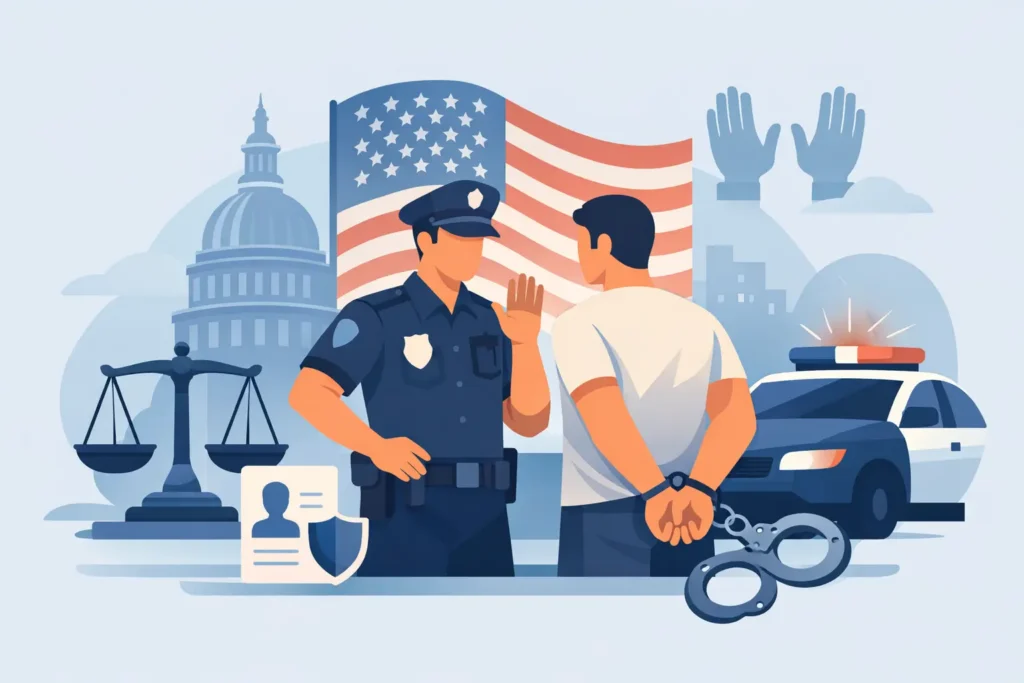
An arrest can move fast: flashing lights, direct questions, a request to unlock your phone, and pressure to explain yourself. If you are asking, what are my arrest rights, the most useful answer is this: stay calm, do not physically resist, and clearly ask for a lawyer before answering questions about an alleged crime.
Your rights are real, but their details can depend on where you are, what police know, and whether you are being stopped, detained, or formally arrested. This guide explains the basic protections that generally apply in the United States. It is not a substitute for legal advice about your specific situation.
Arrest rights start before the handcuffs
Police do not need a conviction, charges, or a warrant in every situation to make an arrest. Generally, they need probable cause – facts that would lead a reasonable officer to believe you committed a crime. An officer can also arrest you under a valid arrest warrant.
A brief police encounter is not always an arrest. An officer may ask to speak with you voluntarily, or temporarily detain you based on reasonable suspicion that criminal activity is occurring. During a temporary detention, you may not be free to leave, but the legal standard is lower than probable cause.
A practical question is: “Am I free to leave?” Ask it calmly. If the answer is yes, you can leave. If the answer is no, do not argue on the street. You can say, “I am going to remain silent. I want to speak with an attorney.”
Your right to remain silent
The Fifth Amendment protects you from being forced to incriminate yourself. In plain terms, you usually do not have to answer investigative questions about where you have been, what happened, who was involved, or whether you committed a crime.
Silence works best when you state it clearly. Simply refusing to talk can create confusion. A direct statement is better: “I am invoking my right to remain silent.” Then stop discussing the facts with officers, detectives, other people in a patrol car, or anyone at the jail.
This does not mean you can provide false information. Lying to law enforcement can create a separate problem. In some states, you may have to provide basic identifying information during a lawful stop. The exact rule varies by state, so it is often wise to provide your name if required while declining all questions about the incident.
You may also be asked to make casual conversation. Comments about “just clearing this up,” apologizing, guessing, or explaining your side can later be used against you. Silence is not an admission of guilt. It is a constitutional protection.
Miranda warnings are not a permission slip to talk
Many people expect police to read Miranda warnings immediately after an arrest. That is not how the rule works. Miranda warnings are generally required before a person who is in custody is interrogated. Officers do not necessarily have to give those warnings at the moment handcuffs go on.
If police question a person in custody without proper warnings, an attorney may be able to challenge the use of certain statements in court. But relying on a later challenge is risky. The safer choice is to invoke your right to remain silent and your right to counsel right away.
Your right to a lawyer after an arrest
You have the right to ask for an attorney. Say it plainly: “I want a lawyer.” Once you clearly request counsel during custodial questioning, officers generally must stop questioning you about the case until counsel is present or you initiate further conversation.
Do not soften the request with phrases such as, “Maybe I should get a lawyer,” or “Do I need a lawyer?” Clear language avoids avoidable disputes later.
If you cannot afford an attorney, tell the court. In criminal cases where jail is a possible outcome, an eligible person may be appointed a public defender or other court-appointed counsel. Appointment procedures and timing vary, but lack of money should not stop you from requesting representation.
A lawyer can assess whether the arrest was lawful, whether a search exceeded legal limits, whether you should seek release, and whether prosecutors have enough evidence to file or sustain charges. Early advice can matter because statements, consent, and bond decisions often happen before the first court appearance.
When police can search you or your belongings
Search rules have exceptions, and the facts matter. Police may be able to search your person after a lawful arrest. They may also conduct a limited pat-down during a stop if they reasonably suspect you are armed and dangerous. A pat-down for weapons is not automatically permission to search every pocket, bag, or digital account for evidence.
Police can sometimes search with a warrant, valid consent, or under an exception to the warrant requirement. For example, evidence in plain view may be seized in some circumstances. Emergency conditions can also change what officers may do.
Your phone deserves special care. In most situations, police need a warrant to search the digital contents of a cellphone after an arrest. They may still take and secure the phone, however. Do not destroy evidence, hide a device, or interfere with an officer. Instead, say clearly, “I do not consent to a search of my phone or belongings.”
You should not physically block a search, even if you believe it is illegal. Resisting can lead to additional charges and can put you at risk. Your attorney can later challenge an unlawful search or seek to exclude illegally obtained evidence.
Consent changes the situation
Officers may ask questions that sound routine but carry legal consequences: “Can I take a look?” “Can you open this?” “Will you unlock your phone?” “Can I search your car?” You can decline consent.
A simple response is enough: “I do not consent to any searches.” Do not debate the law or try to negotiate at the scene. If officers claim they have a warrant, do not interfere. Ask to see it if circumstances permit, remember what you can, and tell your lawyer later.
Declining consent does not guarantee police will stop. They may believe another legal basis applies. Still, making your refusal clear can preserve an important issue for your defense.
What happens after an arrest
After an arrest, you may be transported for booking. Booking commonly involves identification information, photographs, fingerprints, property inventory, and a record of the alleged charge. You may be searched as part of the booking process.
You may then be released, held until a first appearance, or required to post bond, depending on the charge, local rules, criminal history, and other factors. At an initial court appearance, a judge may address probable cause, release conditions, legal representation, and future hearing dates.
Read every release condition carefully. No-contact orders, travel limits, alcohol restrictions, firearm restrictions, testing requirements, and check-in rules can apply even before a case is resolved. Violating a condition can result in a new arrest or loss of release.
What to do in the moment
The goal is to protect your safety and preserve your options, not to win an argument beside a patrol car. Keep your hands visible, follow physical commands, and avoid sudden movements. Do not consent to searches. Do not answer questions about the allegations. Ask for an attorney and repeat the request if questioning continues.
If you are able, remember names, badge numbers, locations, witness names, camera locations, and the sequence of events. After release, write down what happened while details are fresh. Do not post about the incident online, contact alleged victims or witnesses, or delete messages and records.
A criminal accusation can feel isolating, especially when you are trying to find the right type of help quickly. A local criminal defense lawyer can explain the rules in your state, review the facts, and handle communication with police and the court. When a general search feels overwhelming, dwai.com can help organize your next step by connecting you with a relevant local specialist.
Your next conversation about the facts should be with your lawyer, not with law enforcement, social media, or anyone who may later be asked to repeat your words.