
Criminal Lawyer vs Public Defender
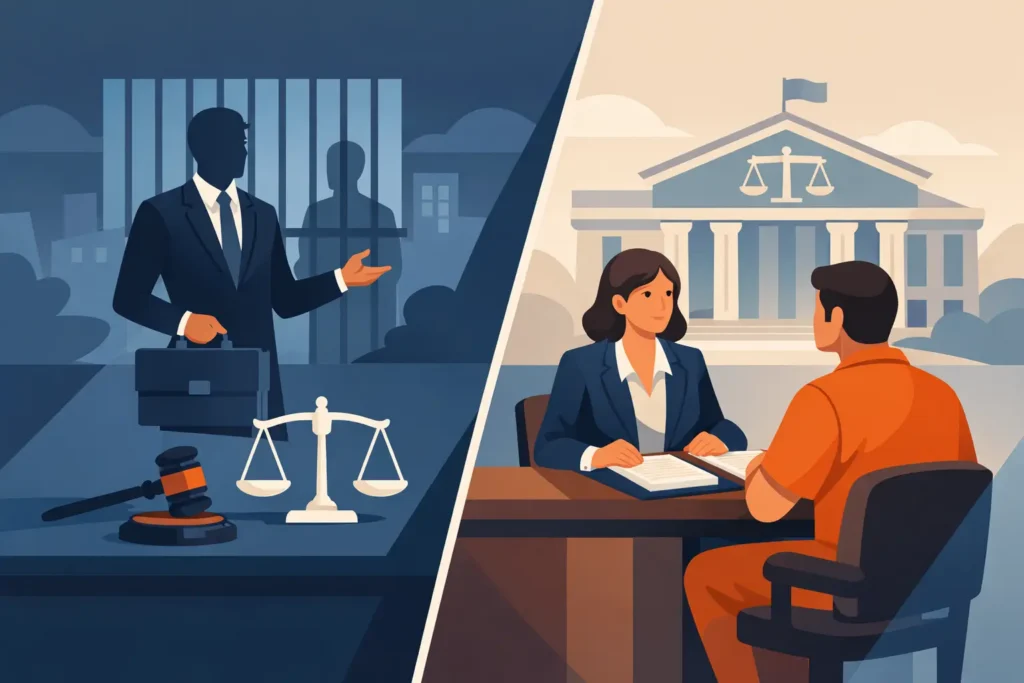
The question usually comes up fast – often after an arrest, a first court date, or a late-night call from jail. When you are trying to make a smart decision under pressure, comparing a criminal lawyer vs public defender is less about labels and more about what kind of defense support you can realistically get.
Both can represent people charged with crimes. Both can negotiate with prosecutors, explain charges, prepare for hearings, and take cases to trial. But they do not work under the same conditions, and that difference can affect communication, time, and case strategy in ways that matter.
Criminal lawyer vs public defender: the basic difference
A criminal lawyer in private practice is hired directly by the client. A public defender is appointed by the court for a person who qualifies financially and cannot afford private counsel. That is the starting point, but it is not the whole story.
A private criminal lawyer sets their own caseload, fee structure, and office process. A public defender works within a public system, usually with heavy caseloads and limited time. That does not mean one is automatically better in every case. It means the experience can look very different depending on your charges, your budget, and how much attention your case may need.
Many people assume a private lawyer is always stronger, or that a public defender is just a fallback. Neither assumption is reliable. Some public defenders are highly skilled trial lawyers with deep courtroom experience. Some private attorneys provide very attentive service and flexible strategy. The better question is whether the lawyer you can access is a strong fit for your case.
What a public defender may offer
Public defenders often know the local court system extremely well. They may appear before the same judges and prosecutors every day. That familiarity can help with plea discussions, local procedure, and knowing how a certain courtroom tends to operate.
They also handle criminal cases full time. In many counties, that means they have seen a wide range of charges, from misdemeanors to serious felonies. Experience matters, especially when the case turns on practical judgment rather than dramatic legal arguments.
For someone who truly cannot afford private counsel, a public defender can be the difference between having representation and trying to face criminal charges alone. That is a major protection, not a minor one.
Still, the trade-off is often time. Public defenders are commonly stretched thin. You may not get long calls, frequent updates, or extended strategy meetings. That can feel frustrating, especially when your future, job, license, or immigration status may be affected.
What a private criminal lawyer may offer
A private criminal lawyer usually has more control over how much time they can devote to each client. That can mean faster responses, more frequent meetings, and closer review of police reports, witnesses, video, or expert issues.
Private counsel may also have more flexibility in building the defense team. In some cases, that includes hiring investigators, consulting experts, or spending additional time preparing mitigation materials for prosecutors or sentencing. Whether that matters depends on the case. For a straightforward minor charge, it may not change much. For a case with disputed facts or serious consequences, it can matter a lot.
The obvious downside is cost. Private defense can be expensive, and fees vary widely based on charge level, location, complexity, and whether trial is likely. Some lawyers charge flat fees. Others require additional payment if the case goes deeper into motions or trial prep. Before hiring anyone, it is smart to ask exactly what the fee covers.
Cost is real, but so is case impact
If you are deciding between a criminal lawyer vs public defender, cost is usually the biggest factor. That makes sense. Legal fees can feel impossible when you are already dealing with bond, missed work, family stress, or towing and impound costs.
But cost should be weighed against exposure. A low-level first offense may not call for the same investment as a felony that could threaten your record, professional license, housing, gun rights, or immigration status. Some people focus only on what a lawyer costs today and underestimate what a conviction could cost later.
That does not mean paying more guarantees a better outcome. It means the stakes should shape the decision. If the charge carries major long-term consequences, the amount of time and attention available to your defense becomes more important.
Communication is where many decisions get made
For most clients, the biggest day-to-day difference is communication. A private lawyer often has more room to answer questions, explain options, and prepare you for hearings. That can reduce panic and help you make informed decisions.
Public defenders may still communicate clearly and effectively, but they often do it under severe time pressure. If you expect same-day updates, long office meetings, or frequent status calls, you may be disappointed. That is usually a system issue, not a sign that your lawyer does not care.
If you are anxious, confused, or trying to understand collateral consequences beyond the criminal charge itself, communication matters. A defense strategy is easier to trust when someone has time to explain it.
Case complexity changes the equation
Not every criminal case needs the same level of legal attention. A routine misdemeanor with little factual dispute may be handled well by either type of counsel. A more complicated case may expose the difference in available time and resources.
Cases involving DUI evidence, digital records, search and seizure issues, forensic testing, self-defense claims, mental health factors, or multiple witnesses often require deeper review. The same is true when the accused has immigration concerns, prior record issues, or employment consequences tied to the charge.
In those situations, the question is not simply who is cheaper. It is who can realistically investigate, challenge evidence, and prepare the case at the level it requires.
How to choose without guessing
If you may qualify for a public defender, it is still worth approaching the decision carefully. Ask what the process looks like, how often you can expect updates, and whether someone else in the office may handle hearings if the assigned lawyer is unavailable. Public defender offices vary, and so do individual attorneys.
If you are considering private counsel, ask direct questions. How many cases like yours have they handled recently? Will they personally appear in court, or pass the case to another lawyer? What is included in the fee? How do they approach plea negotiations versus trial preparation? A calm, organized answer tells you more than a polished pitch.
This is one reason organized attorney discovery matters. When people are scared, they often make rushed choices based on the first name they hear. A structured directory can make that process easier by helping users sort by category and find a verified local specialist without bouncing through random search results.
Is one better in Florida?
Florida adds practical considerations because criminal cases can move quickly, and local court culture matters. In some counties, public defenders have substantial courtroom experience and strong familiarity with judges and prosecutors. In others, a private lawyer with a focused local practice may offer more direct access and more time for the case.
If your issue involves a driver’s license consequence, pretrial release problem, or a charge that could affect a professional future, local experience matters more than broad marketing claims. You want someone who knows the court you are actually walking into.
When a public defender may be the right choice
If you qualify financially, your case is relatively straightforward, and private fees would create serious hardship, a public defender may be the right path. Having experienced legal representation through the court is far better than trying to navigate arraignment, plea offers, and sentencing exposure by yourself.
It may also be the best option when you need help immediately and cannot gather funds fast enough to retain counsel. Waiting too long to get any lawyer can be a bigger mistake than accepting appointed counsel.
When a private criminal lawyer may be worth the cost
Private counsel may make more sense when the charge is serious, the facts are contested, your record or reputation is at risk, or you know you will need more access and more explanation throughout the case. It may also be worth the cost when there are side effects outside the courtroom, such as immigration issues, licensing concerns, or job-related fallout.
For some people, the deciding factor is simple: they want a lawyer with more time to focus on them specifically. That is not vanity. In a criminal case, attention can be practical value.
A good defense decision is not about pride or panic. It is about getting the level of help your situation calls for, from someone who can actually carry it through. If you feel overwhelmed, start with the facts of your case, your budget, and the stakes you are facing, then connect with the kind of legal support that gives you a clear path forward.